Greg Orrock
Yacht and maritime operations

Ten years at sea with the Merchant Navy, from cadet to Chief Officer on private superyachts with crews of up to forty and an annual operating budget above $20M. In 2026 I went back to sea as Chief Mate on a 34 m commercially registered yacht.
On board I replaced paper routines with the tools below and cut admin time by three quarters. Between the two spells at sea I spent five years running operations and commercial teams in startups.
Built during a refit and delivery season in 2026 as Chief Mate on a 34 m commercially registered yacht. Each tool replaced a paper routine on board. The vessel, crew and places in the demos are invented.
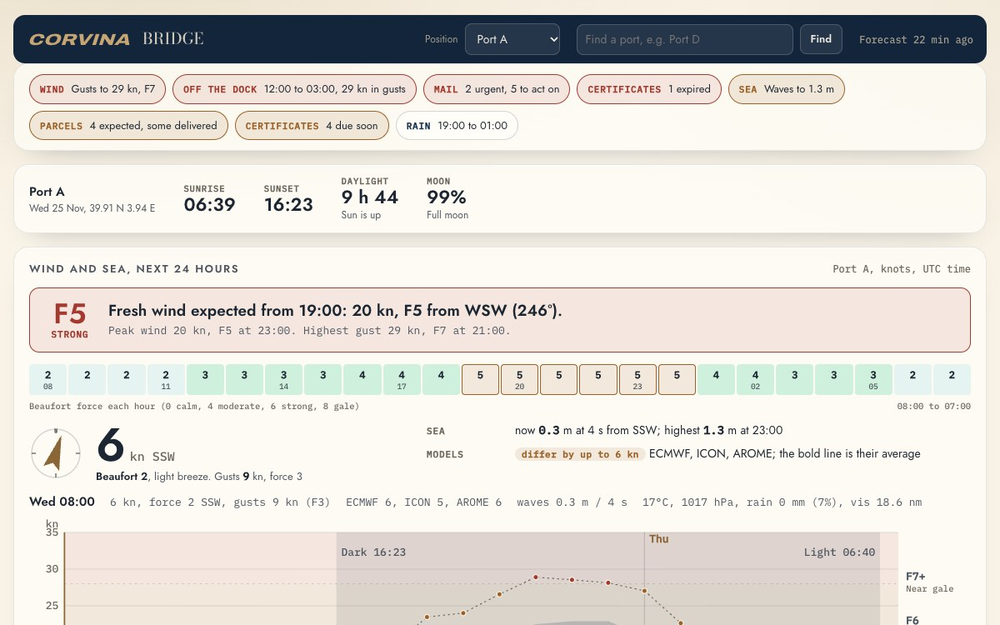
The next 24 hours of wind, gusts, sea and tide for the yacht's position, from three forecast models. It marks the hours when the wind will push her off the berth, and lists mail that needs action and certificates falling due.
Forecasts and mail are simulated in the demo.
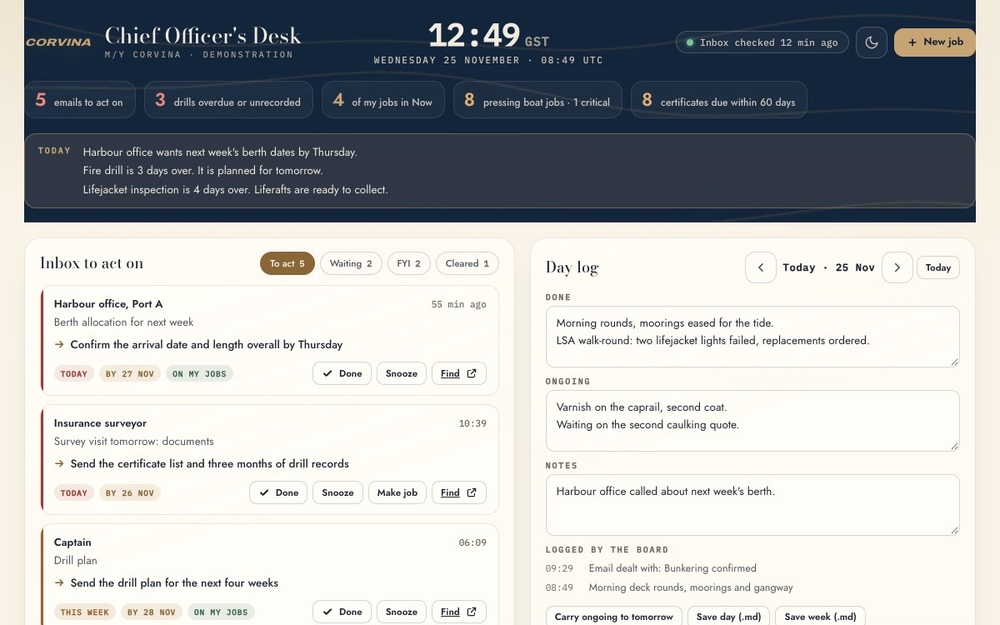
The Chief Officer's working board. Emails become actions or jobs, and drill timers count down against a four-week plan. The maintenance worklist and certificate expiries sit on the same screen.
On board it checked the inbox every hour and never marked anything as read.
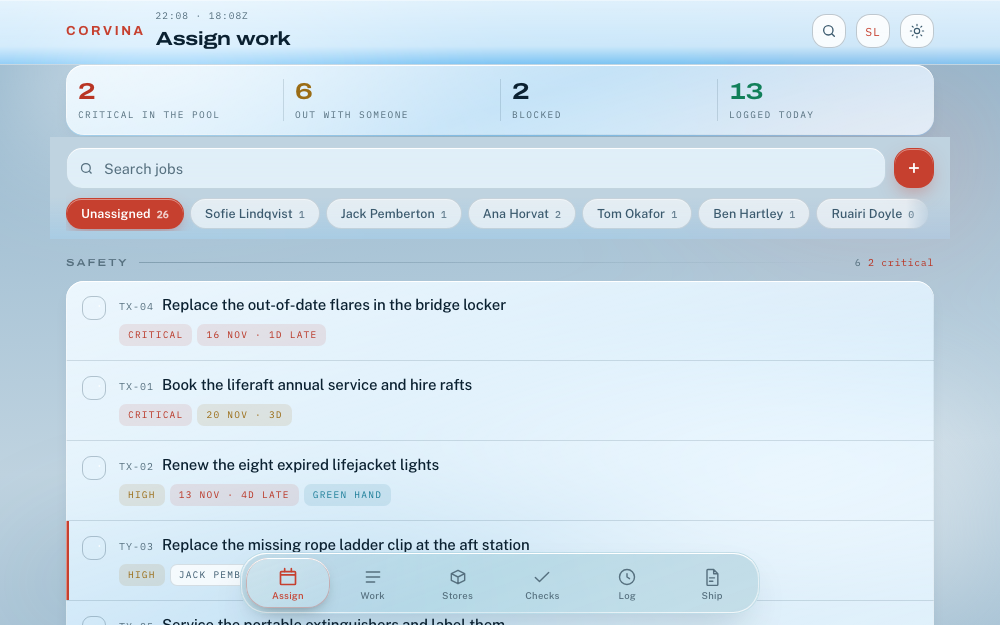
A phone board for running the deck department. Jobs are handed out and ticked off on it, and stores are counted locker by locker.
Its ship's file links each certificate gap to the job that closes it.
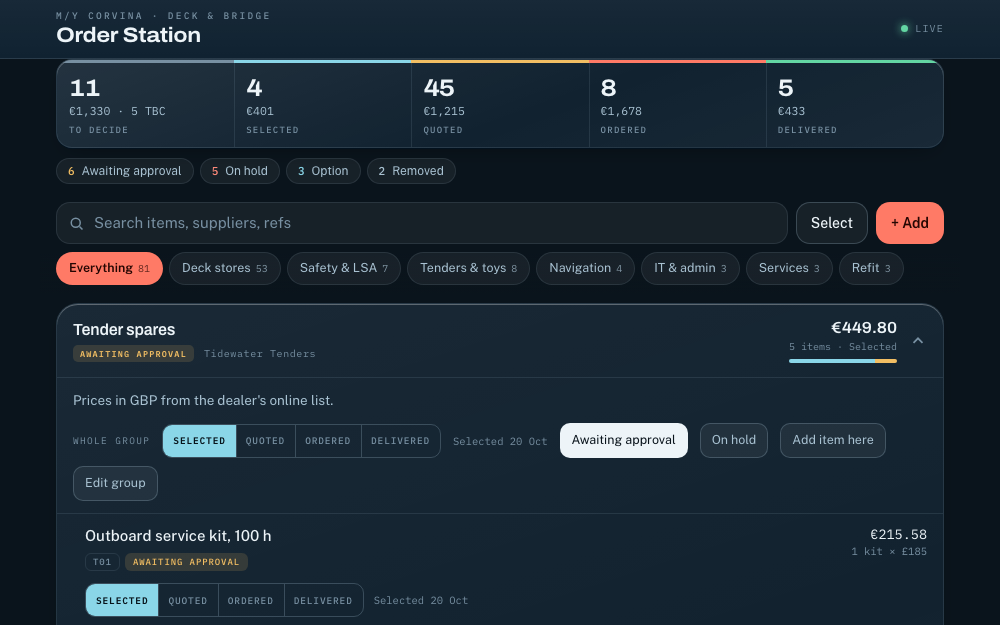
A live tracker for deck, safety, tender and service purchases, grouped by quote or order. Each line moves from selected to quoted, ordered and delivered, with totals converted to euros.
Suppliers and items in the demo are invented.
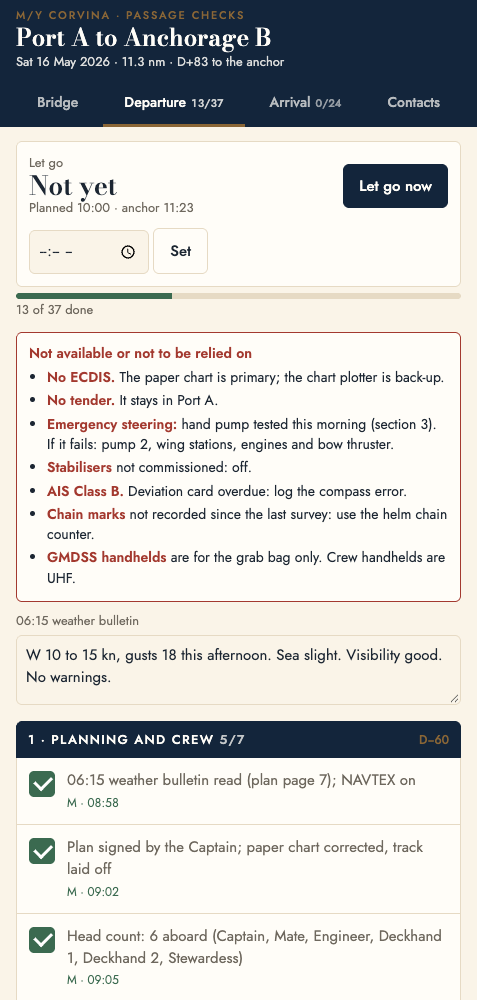
A phone checklist for one passage, with 37 departure checks and 24 arrival checks. Waypoint times update when the lines are let go. Each tick records who made it and when.
Generated from the written passage plan, so the plan and the checklist cannot disagree.
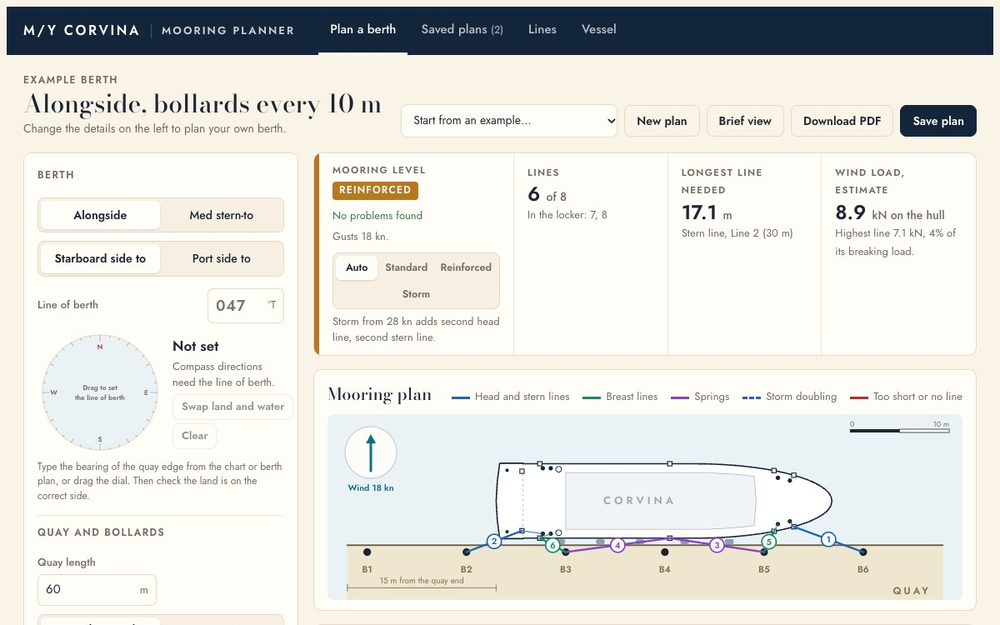
Enter the berth, the bollard spacing and the forecast gusts. It sets the mooring level, assigns lines from the register, estimates the wind load on each and gives the rigging order station by station, with a two-page plan to print.
The calculation engine runs against a suite of berth scenarios before each release.
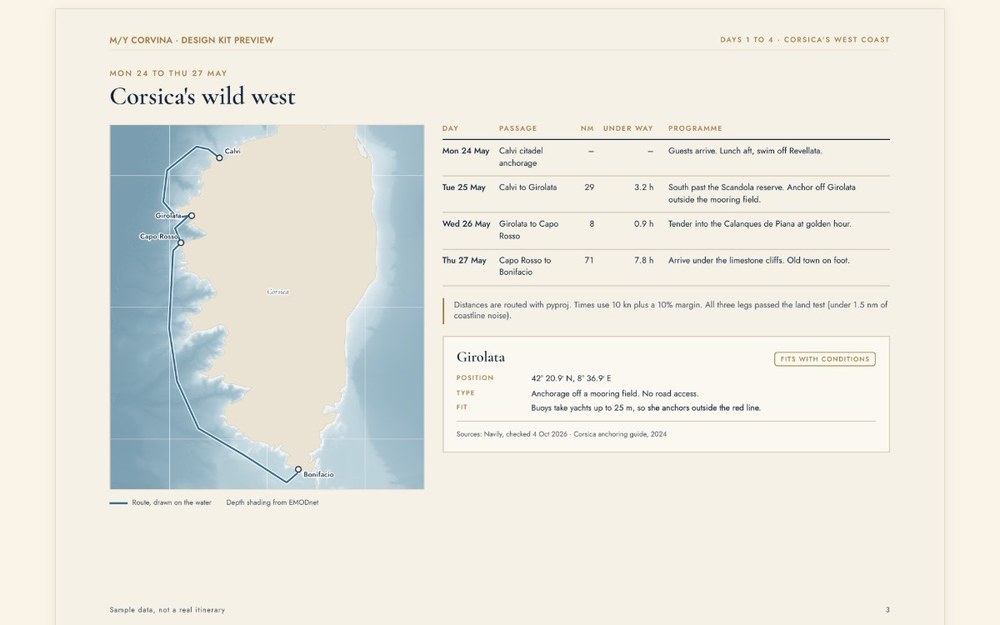
The captain writes a trip brief in plain words. The planner returns two route options with a recommendation, each as a printed book, a web map and a spreadsheet. Routes are checked against the coastline, and departure dates are scored against 20 years of weather records.
Sample pages from the design preview, with an invented trip.
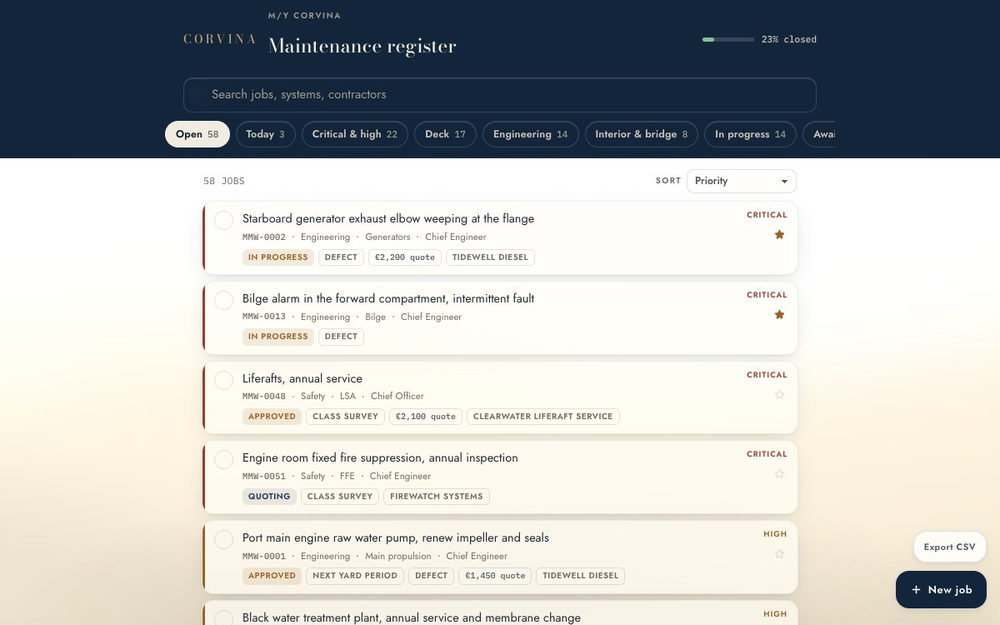
One register of maintenance and defect jobs. It replaced a 581-line list in which 43% of the rows were duplicates and about 5% of the budget was counted twice.
Each job carries a fixed status, an owner, a cost and its history.
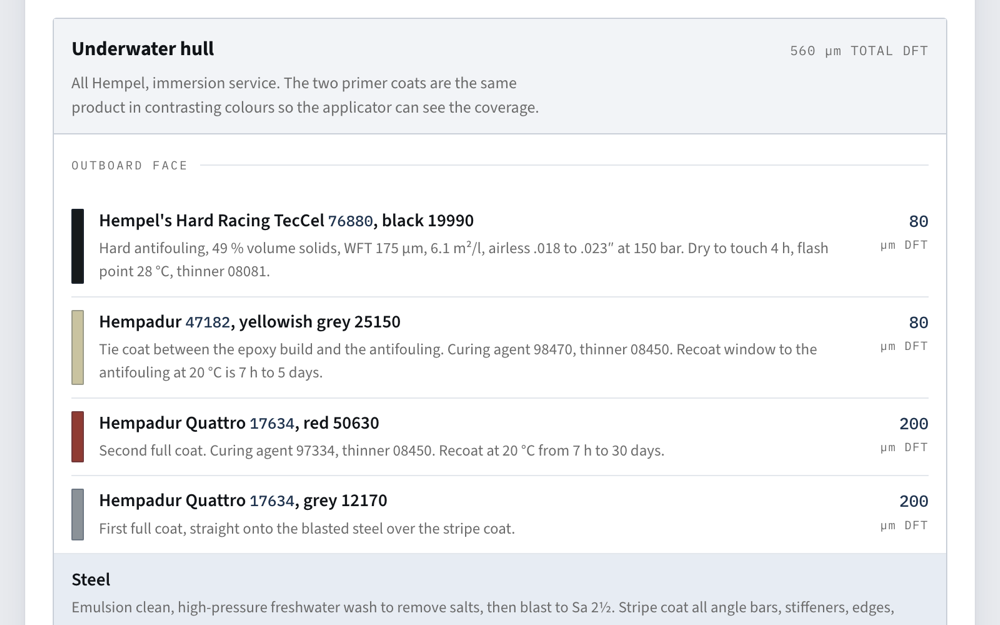
The yacht's paint system set out coat by coat for the hull, superstructure and chain lockers, with film thicknesses, colour codes and the maker's care rules.
It also tracks the antifouling record and what is in the paint locker.
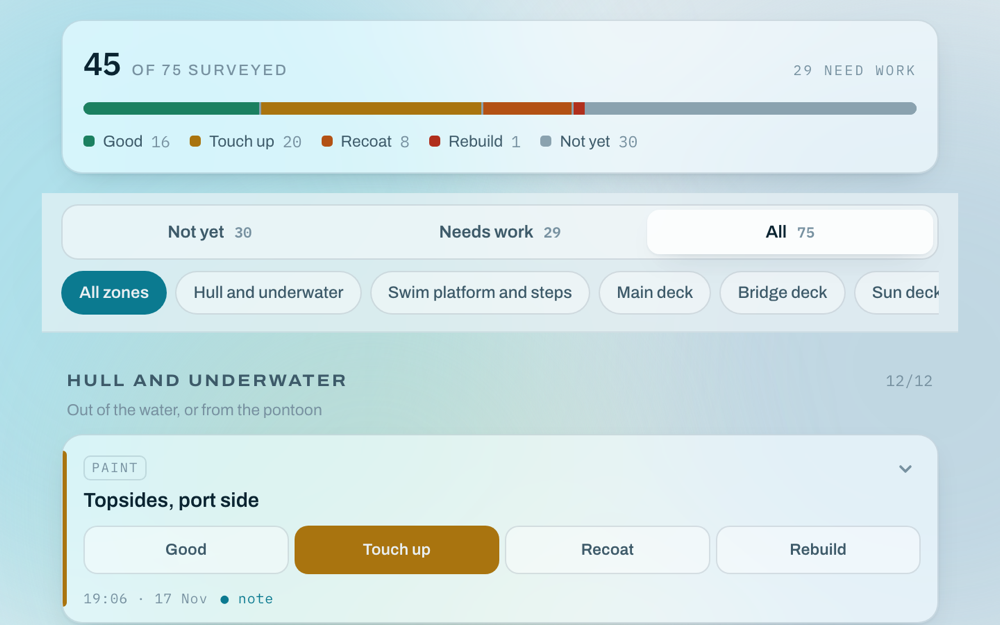
A walk-round checklist that rates 75 painted, varnished and stainless surfaces by zone, with a time-stamped note on each. A running tally shows how many areas need work.
The demo opens with 45 invented ratings.
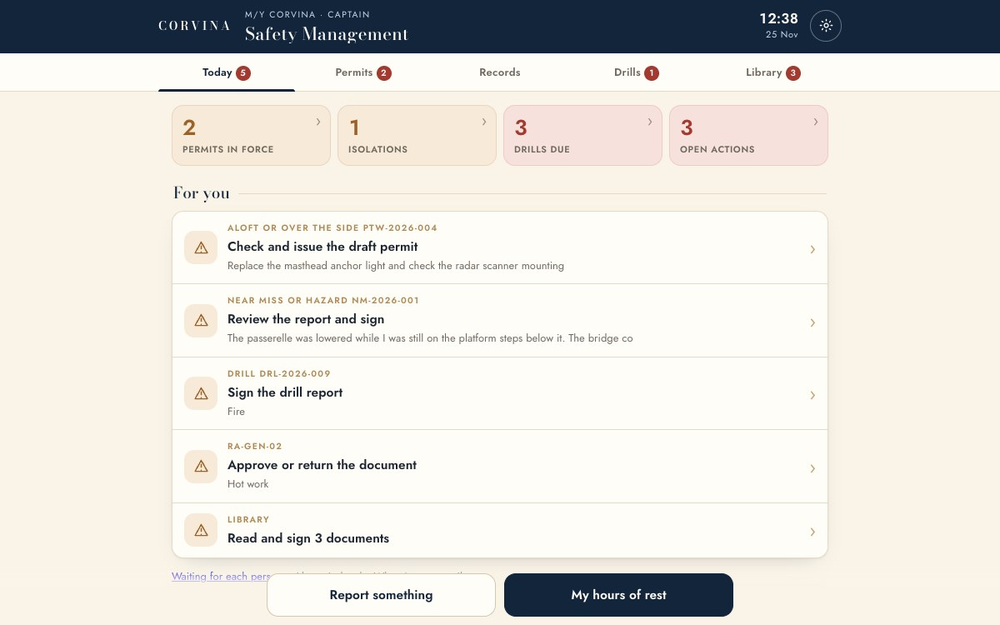
Permits to work with gas tests and isolations, incident reports, drills and hours of rest in one phone app. Each crew member opens it to a list of what is waiting for them. Safety documents go through approval, then every crew member reads and signs them.
On board it carried a library of 193 safety documents. The demo library is ten invented ones.
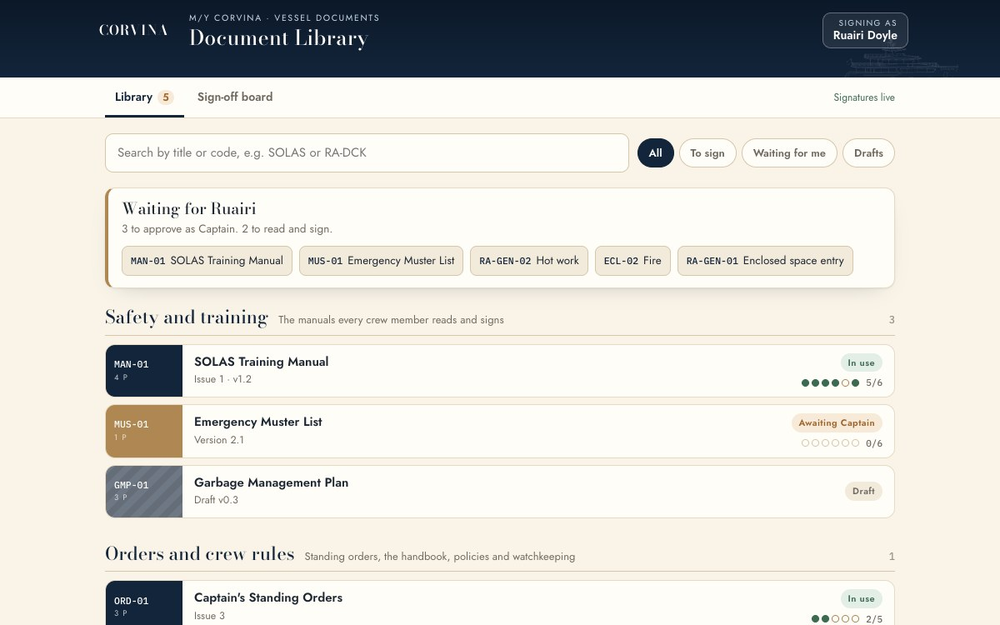
Every vessel document shown as its printed pages. The Captain approves each issue with a drawn signature. A board shows which crew still have to read and sign it.
The demo library is twelve invented documents.
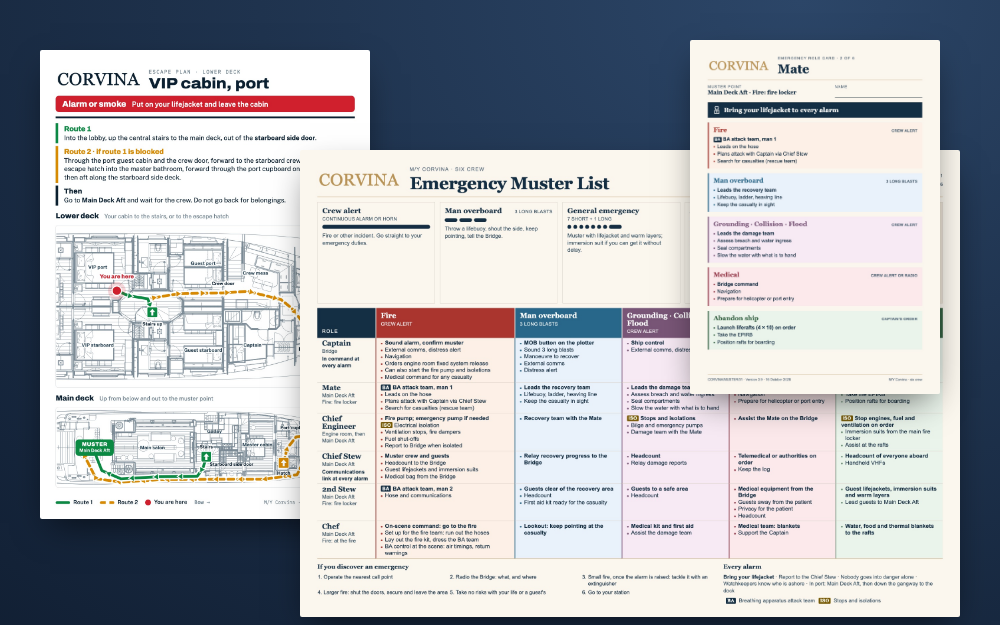
Guest escape plans for each cabin, an A3 muster poster, a role card for each post and station crew lists for a six-crew yacht. Each sheet gives the alarm signals and what every post does at each alarm.
Deck drawings are traced from the yacht's general arrangement.
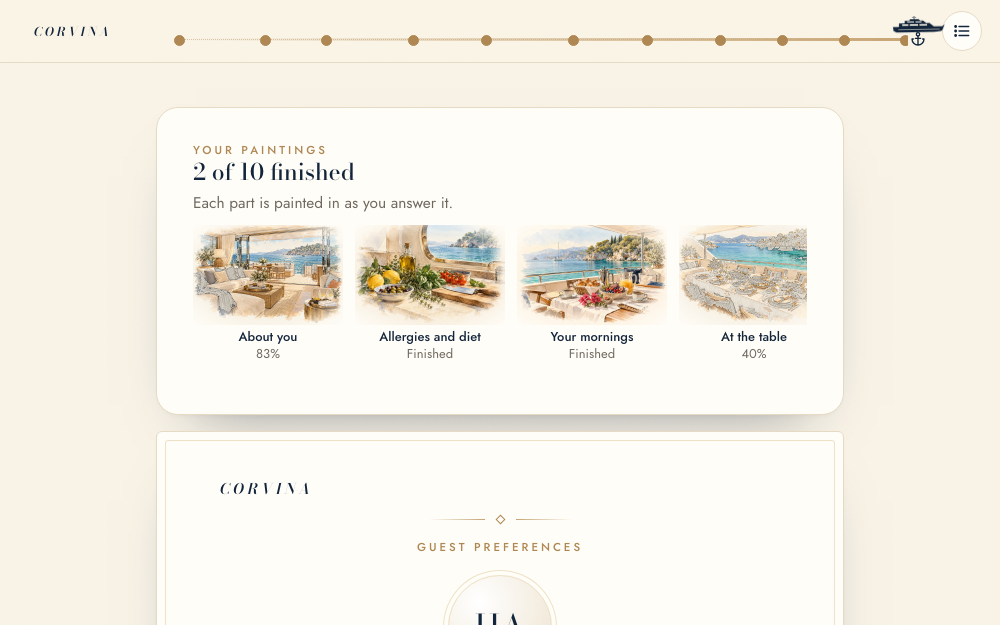
Charter guests answer a short questionnaire about food, drink, cabins and water sports, and a watercolour fills with colour as they go. The crew get one page per charter with allergies first, and each department receives its own summary email.
Use the demo menu to see the crew page and the emails.
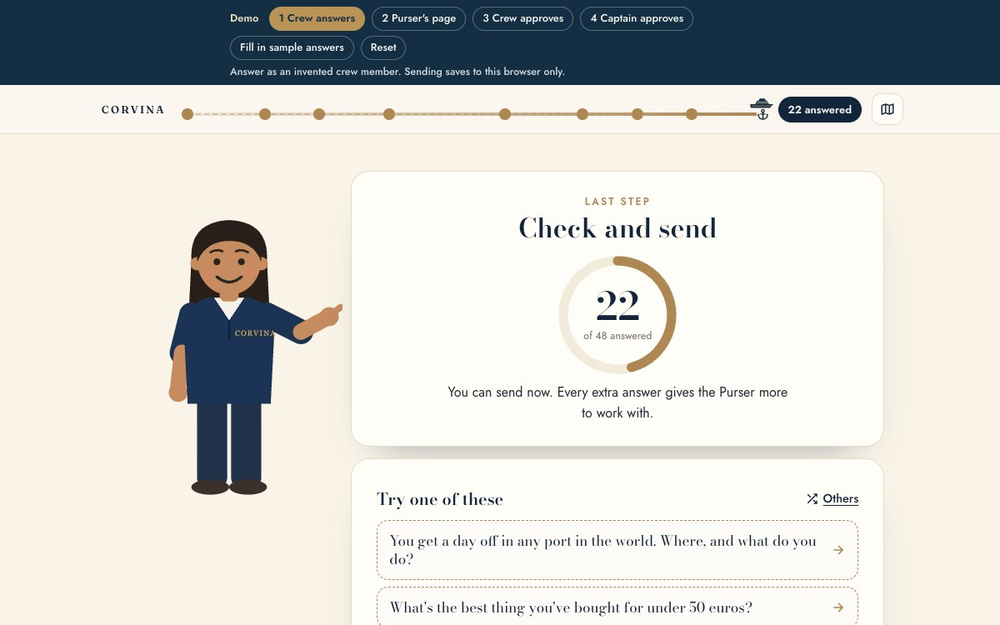
Crew answer up to 48 questions about themselves on a phone, one card at a time. The Purser turns the answers into profiles for the guest welcome book, and the crew member and then the Captain approve the text.
The profile writing step is shown with a prepared example.
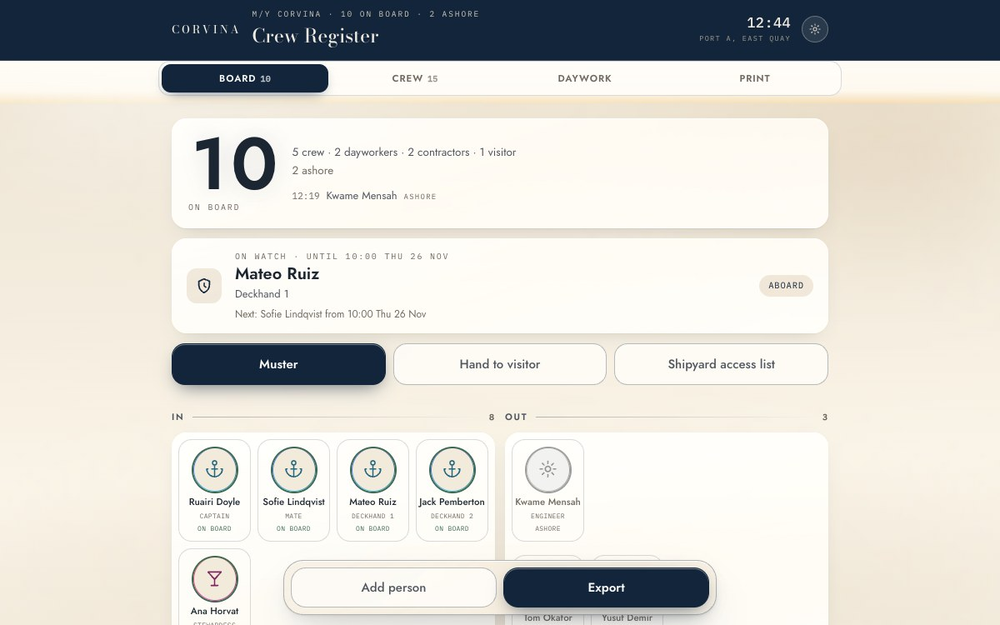
Who is aboard right now, on one board: crew, dayworkers, contractors and visitors. Visitors sign in at a kiosk after a safety brief. One tap starts a muster, and the crew list and shipyard access list print from the same records.
New-joiner familiarisation and dayworker time sheets are signed on screen in the same tool.
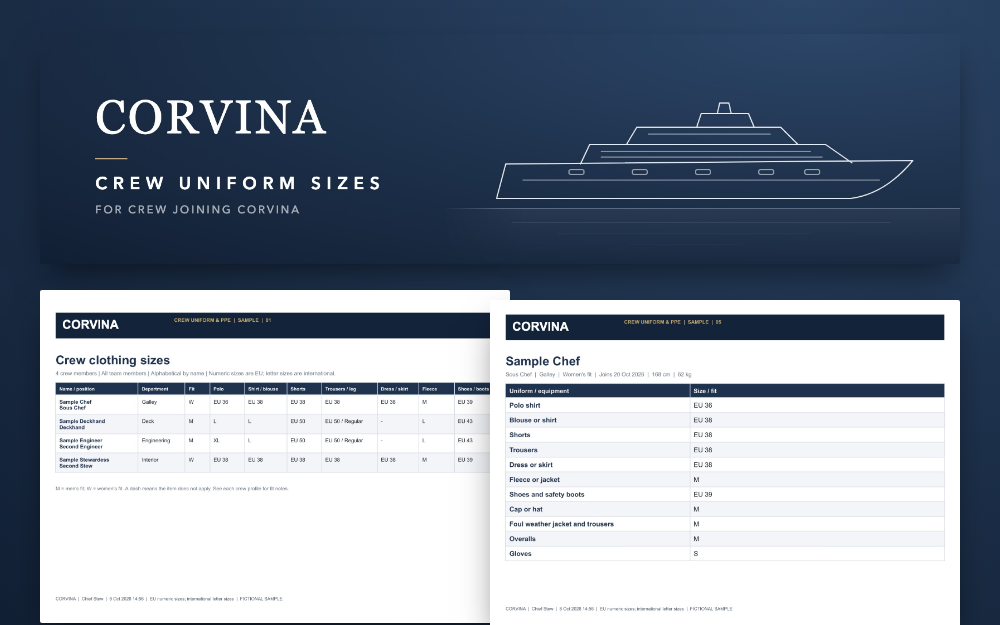
Two forms collect crew uniform sizes and the owner's family's water sports sizes. On each answer a script rebuilds a PDF of sizes and order totals and emails it to the crew who need it.
Built on Google Forms and Apps Script. The demo shows sample output.
A 61-page safety training manual written for one yacht to SOLAS, covering alarms, lifesaving appliances, fire, other emergencies and drills, with a crew sign-off page. It replaced an earlier manual and closed a flag-state inspection finding.
Two A4 pages for the interior team: the daily routine by time of day, then the weekly and monthly schedule.
A 54-line request for quotation to the chandler, laid out to print on A4 and tracked afterwards in the order station. View the demo copy.
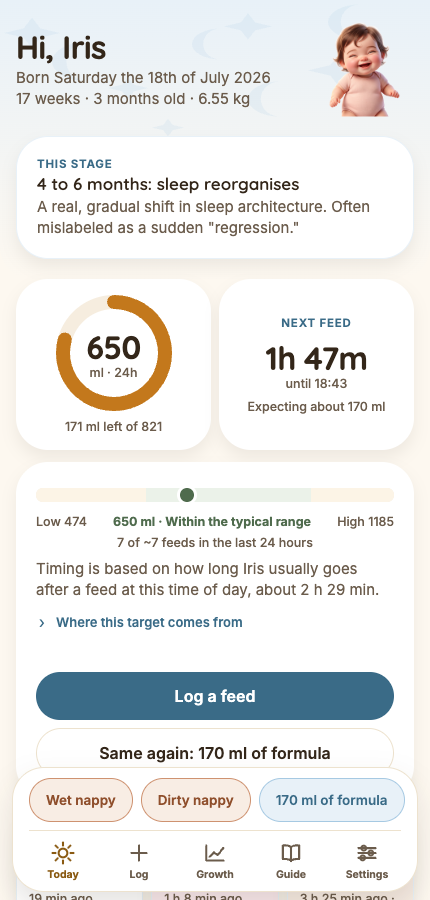
Logs feeds, sleep, nappies and growth, and sets each feed target from the baby's weight and feeding type. Growth is plotted against WHO percentiles, and every health claim names its source.
One codebase for iOS, Android and web, with no account and no server. Not yet on the app stores. The baby in the demo is invented.
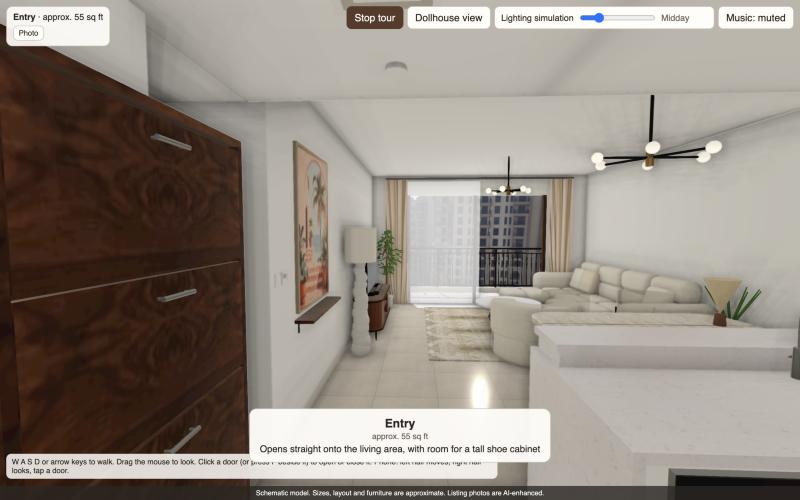
A guided 3D tour of a two-bedroom flat in the browser. Walk the rooms, switch to a dollhouse view, move the furniture and open the listing photo for each room.
Built from phone photos and a measured layout to let my flat out. Sizes are approximate and the photos are AI-enhanced.
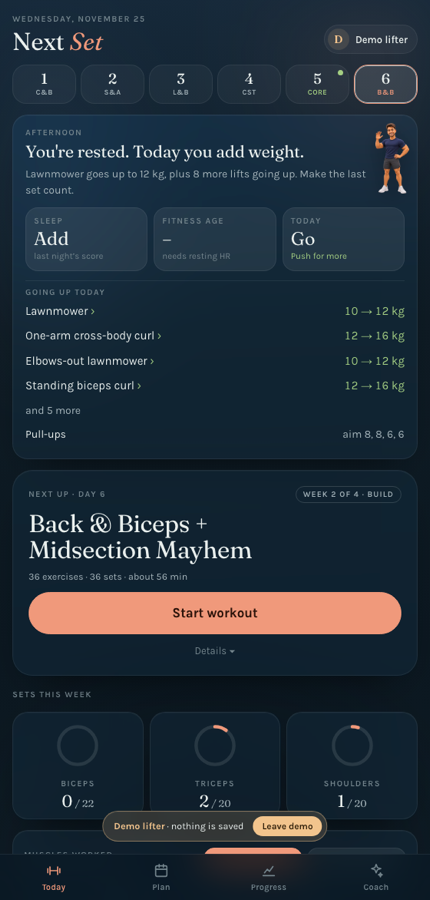
A phone app that runs a gym session one set at a time, with a demonstration of each move and a timed rest between sets. It raises the weights from what was logged and shows which muscles have been worked or have recovered.
Built for my own training. The demo opens on an invented lifter with five weeks of made-up sessions and saves nothing. The AI coach only runs in the full app.
Runs a design studio from one file, from the first quote to the final invoice.
Runs a first meeting with a buyer in 13 stages, from setup to the agreed next step.
Prices an online store by two methods and places it inside the range with a strength score.
Seven palettes and 21 typefaces on a live preview of the mark, with colour contrast checked as you choose.
The pack for selling an online brand: an investor portal, a one-page summary and a risk register.
Every core fintech claim could be supported once its wording was corrected. The platform was repositioned around a single entry product, and on my recommendation the round was raised from £0.4M to £0.5M so it covered the plan. I then wrote the method up as a five-step playbook for later engagements.
5,695,465 registered companies cut to 10,498 candidates, then to a call list of 2,081 businesses.
The first time one pattern was tightened, it found 14 live errors across five documents that had passed a check that morning.
I build with AI coding tools. The process each tool follows comes from doing the job myself. Every demo here runs on invented data, and client names have been removed.