
A Swiss direct-to-consumer skincare brand built on a sole-source micro-needling device. $2.12M trailing revenue at a 19.3% net margin, 13,950 customers, and a repeat rate above category benchmark. Offered at a one-year payback, with the diligence already done and every open risk disclosed.
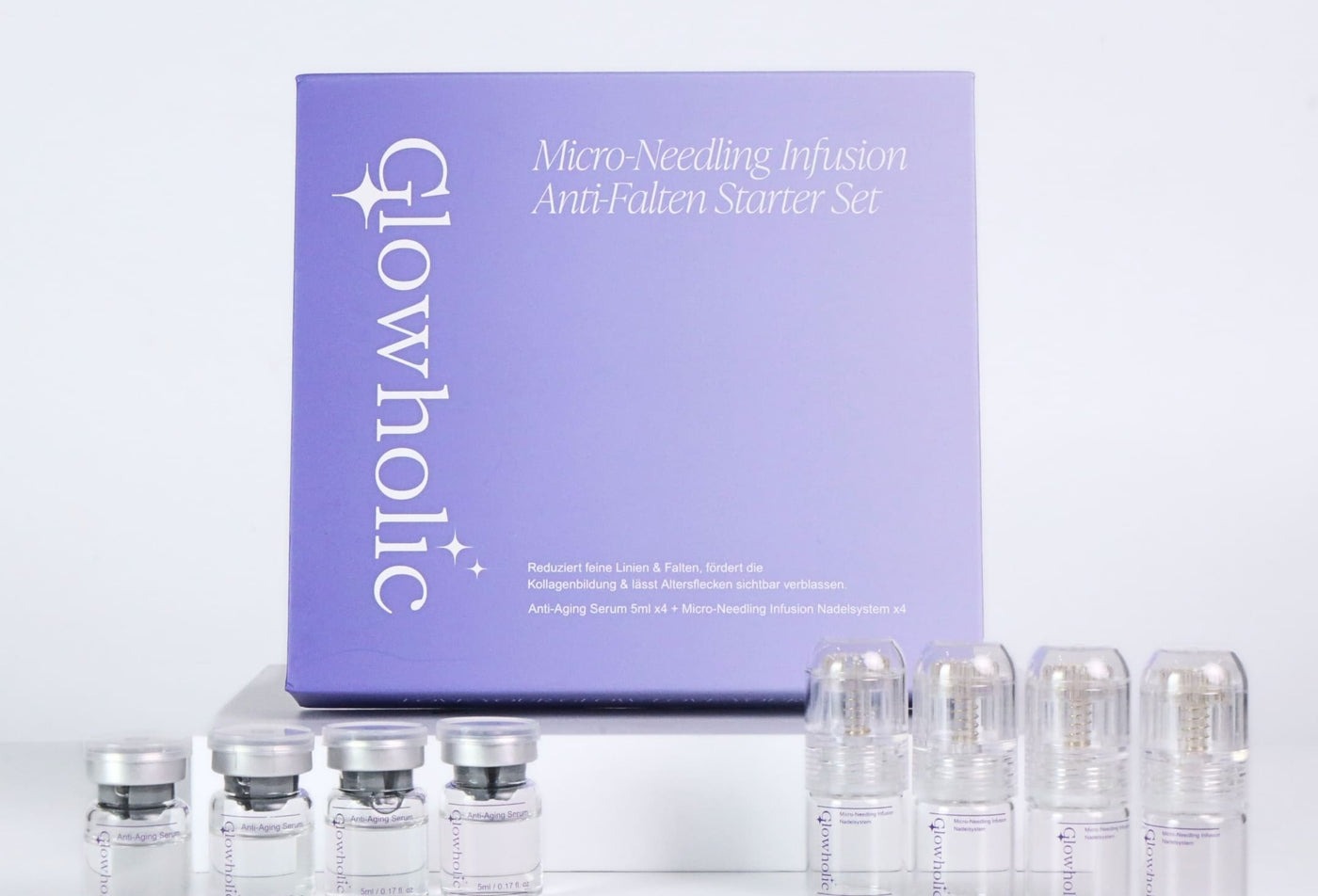
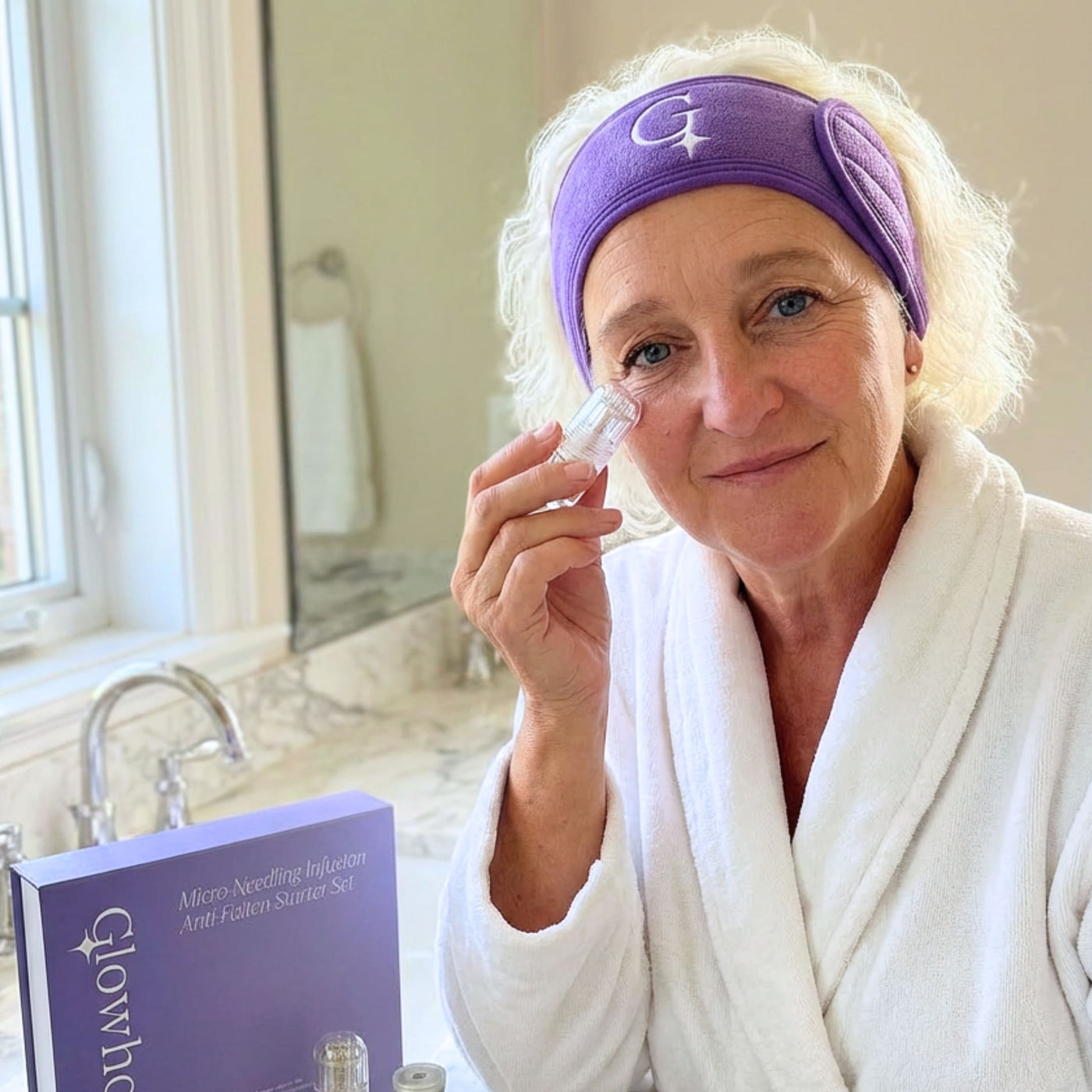
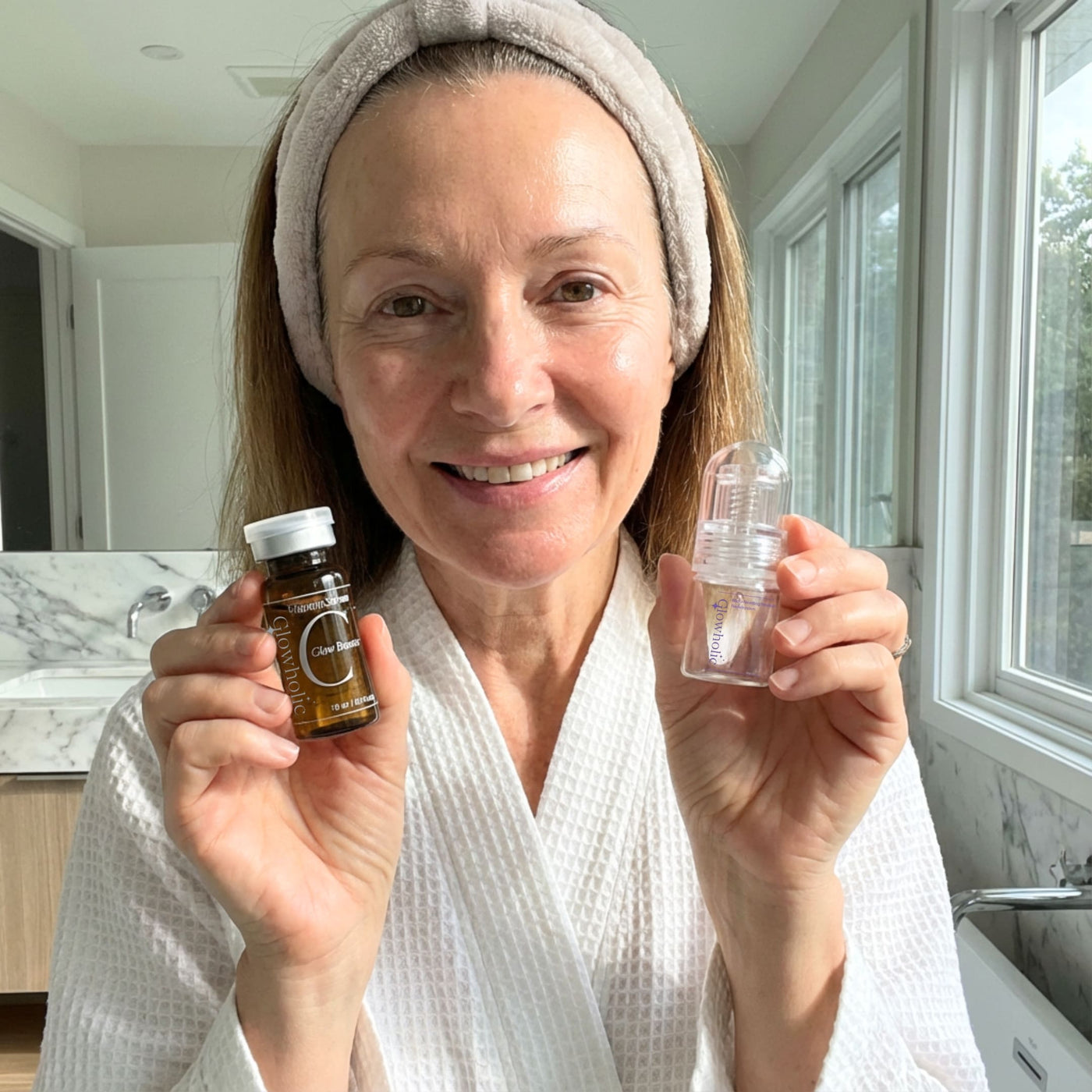
Glowholic sells a spring micro-needle infusion system: a home-use device that opens micro-channels in the skin so paired serums absorb subcutaneously rather than sitting on the surface. The brand's own promise to its customers is a clinic-grade result without the pain, the appointments or the cost of a clinic: five minutes, at home.
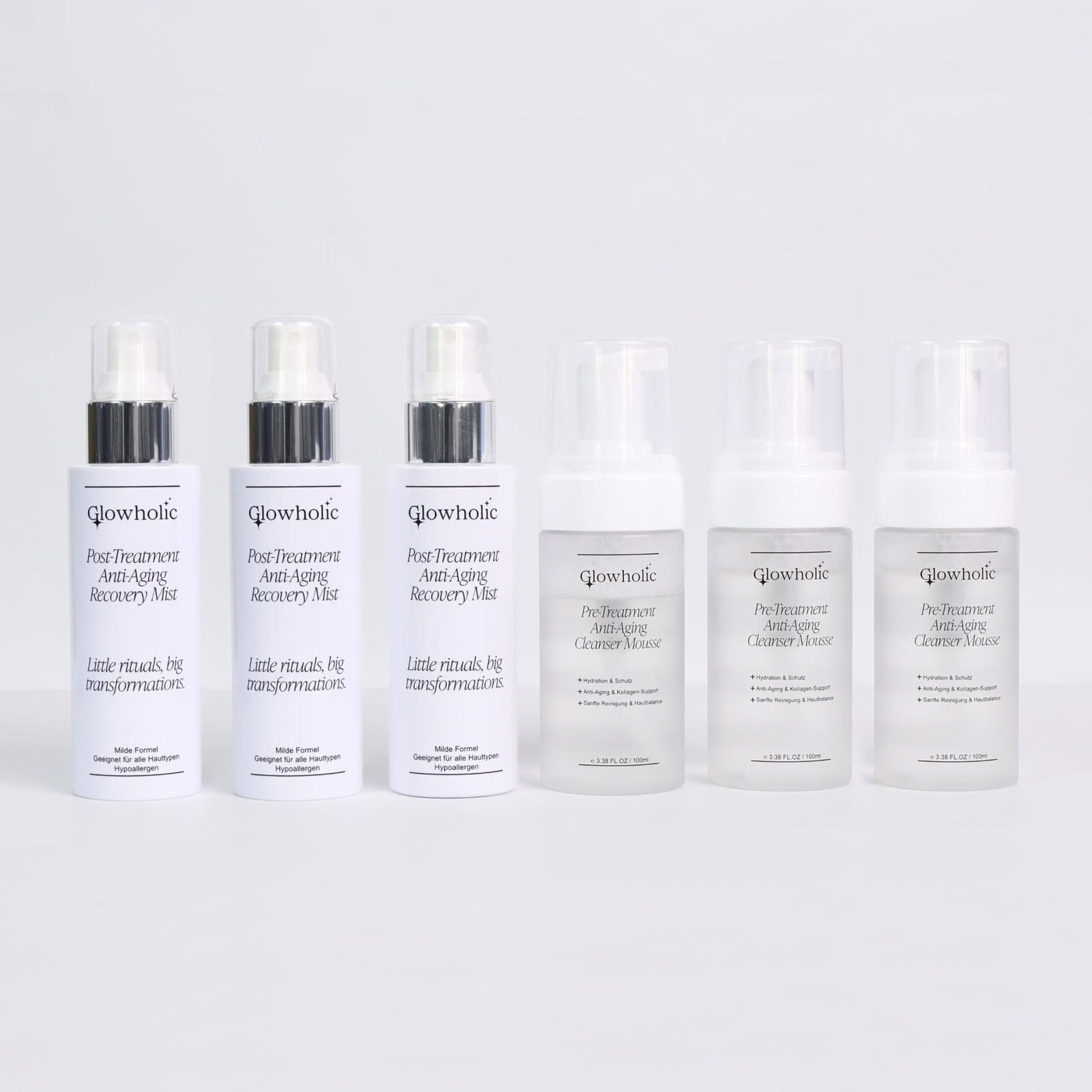
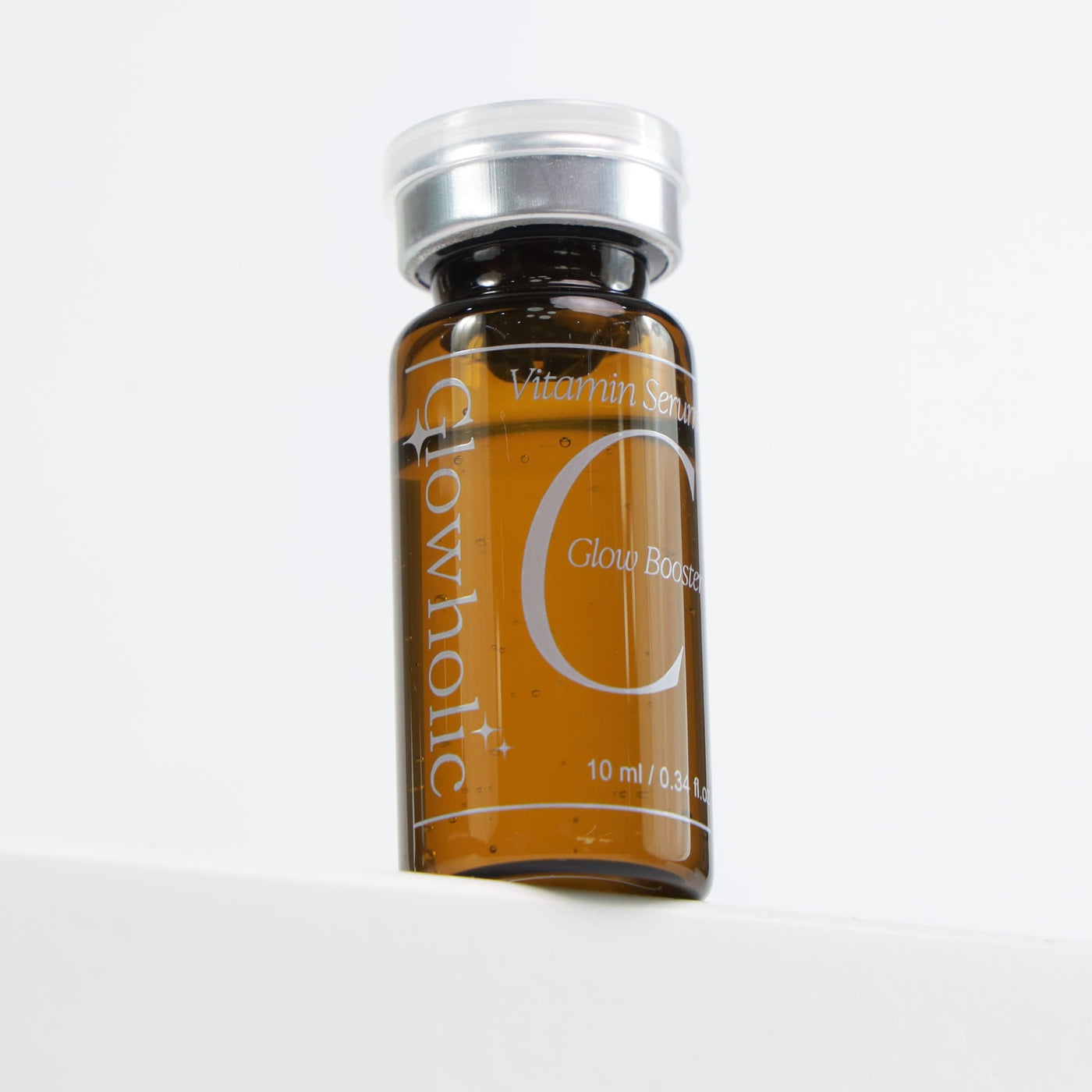
It launched in September 2024 and reached $2.12M of trailing revenue inside twenty months, selling in German across Switzerland, Germany and Austria. The device sits at the centre of a routine: a cleanser before, a recovery mist and boosters after, patches and masks between. That structure is what turns a one-time device purchase into a repeat customer.
| Period | Revenue | Net profit | Margin |
|---|---|---|---|
| 2024 (Aug–Dec) | $115,140 | $20,451 | 17.76% |
| 2025 (Jan–Dec) | $1,212,261 | $245,643 | 20.26% |
| 2026 YTD (Jan–Jun) | $1,281,275 | $231,033 | 18.03% |
| TTM (Jun 2025 – May 2026) | $2,118,140 | $408,753 | 19.30% |
| Line | Amount | % of revenue |
|---|---|---|
| Cost of goods (verified from order sample) | $679,605 | 32.09% |
| Advertising (Meta, Google, TikTok) | $844,928 | 39.89% |
| Transaction costs | $87,840 | 4.15% |
| Subscriptions & tools | $38,845 | 1.83% |
| Staff and contractors, no salaried payroll | $58,169 | 2.75% |
| Net profit | $408,753 | 19.30% |
| Metric | Value | Category benchmark |
|---|---|---|
| Average order value (TTM / 90d / all-time) | $148.25 / $135.44 / $119.28 | All three windows shown; commodity devices sell under $60 |
| Repeat purchase, last 90 days | 37.3% | 25–30% for beauty; above benchmark |
| Repeat purchase, lifetime | 16.81% | Reflects the earlier, thinner catalogue |
| Purchasing customers / orders | 13,950 / 17,626 | 1.26 orders per customer |
| Email profiles, active / total | 18,613 / 30,604 | — |
| Subscription, active / MRR | 80 / $5,729 | 0.57% penetration; see Growth |
| Subscriber churn, 90-day cumulative | 26.67% | ≈10%/mo, inside the 8–12% norm |
The headline margin is real, but it is not earned where you might assume. Working from the customer-level data rather than the P&L:
| Cost to acquire a customer | TTM | Basis |
|---|---|---|
| Media-only CAC | $80.52 | $844,928 ad spend ÷ 10,494 new customers |
| Fully-loaded CAC | $98.13 | plus staff, tools and transaction costs, on the data room's own definition |
| June 2026, fully loaded | $140.25 | most recent month |
| Lifetime value | On lifetime AOV ($119.28) | On TTM AOV ($148.25) |
|---|---|---|
| Orders per customer | 1.26 | 1.26 |
| LTV, revenue | $150.71 | $187.32 |
| LTV, gross profit at 67.9% | $102.34 | $127.21 |
| LTV : CAC vs media CAC | 1.27× | 1.58× |
| LTV : CAC vs fully-loaded CAC | 1.04× | 1.30× |
| LTV : CAC vs June 2026 CAC | 0.73× | 0.91× |
This business grew by buying customers. $844,928 of trailing ad spend produced $2.12M of revenue at a 2.51× return. That is a respectable result, but it means acquisition rather than retention carried the year. Meanwhile the assets that compound were left running at a fraction of their capacity. That is the opportunity: the things that grow this business are already built and already paid for.
The Loop programme works. It bills, it retains, and it produces $5,729 of monthly
recurring revenue from 80 of 13,950 purchasing customers, roughly one in every 174.
It is worth being precise about why. Subscriber churn of 26.67% over 90 days looks alarming
until you benchmark it: DTC beauty subscriptions average 8–12% monthly churn, and 44% of all
cancellations across the category happen in the first 90 days. Glowholic is inside the normal
band. Retention is not the defect. Distribution is. The programme has simply never been
properly sold, on a product that is a genuine consumable sold in one-, two- and three-month
cycles. That is a far more tractable problem than fixing a leaky funnel.
18,613 active Klaviyo profiles of 30,604 total, built at real cost through paid acquisition and currently run as a support channel and not as a revenue channel. 11,991 profiles are unengaged or suppressed. A re-permission and win-back programme against a list that size is standing revenue at near-zero marginal cost. This is also the lever that reduces dependence on Meta, which matters most while acquisition cost is elevated.
95.2% of revenue comes from two countries. Austria at 4.7% is the proof point that
the same catalogue, creative and certifications travel to a third market without reformulation.
The wider EU is unaddressed rather than tested and rejected.
One sequencing note, and it is important. Any EU expansion has to clear a regulatory
question first (see section 06). In the EU, microneedling systems are generally treated as
Class IIa medical devices, and the classification turns on needle depth and on how the product
is described. Until that is resolved, expansion is planned but not launched. It is the first
workstream after close, not the last.
The hair-growth line is a complete, launched product family addressing a different buyer with a different problem, marketed at a fraction of the intensity of the anti-aging hero. The seasonal SPF 50 serum, added to soften the summer trough, shows the playbook works. Both extend the catalogue without extending the supply chain.
We found this business and worked the diligence through to the bottom. What that produced is the document you are reading: financials rebuilt from source, a corrected set of numbers, and a risk register with nothing held back.
That work is the only thing we are adding, and the price reflects it. We are not going to operate the business for you. There is no management fee, no retained interest and no earn-out. You buy the asset, you run it, and everything we know about it is already in front of you.
| Area | What was done, and what it found |
|---|---|
| Financial reconstruction | The P&L rebuilt month by month from Shopify and payment-processor records across 2024–2026. Three profit bases reconciled and reported side by side: reconstructed ($325,324), normalized ($408,753) and the seller's own claim ($382,049), rather than a single figure chosen to flatter. |
| COGS verification | Verified at 32.09% from an order-level sample, with the limits stated: the sample was drawn only from April–June 2026, and outbound freight is roughly half of landed cost but is not tracked as its own line. |
| Customer data | Four errors found in the seller's own figures and corrected. The customer count was stated as 30,397; the customer-level export shows 13,950 purchasers. Orders, email suppression and subscription penetration were all wrong as a result. Every ratio in this document is rebuilt on the corrected base. |
| Unit economics | LTV and CAC computed from customer-level data, which the seller had not done. LTV:CAC runs at roughly 1.3×, and the split between first and repeat orders shows the business breaks even acquiring customers and earns substantially all of its profit from repeat purchase. That is the single most important thing to know before buying it. |
| Regulatory | An exposure nobody had identified. In the EU, microneedling systems are generally treated as Class IIa medical devices. Germany and Austria are 29% of current revenue, so this is a live position and not a future expansion question. |
| Risk register | Ten open items documented with root cause, remedy and expected clearance window, including the chargeback rate, the payment reserve, the Trustpilot breach, the absence of any supplier contract and the fact that the patent is held by the manufacturer. |
| Working capital | The data room's own $39,248 figure was tested and fails: modelled forward it goes cash-negative in month 3. ~$100,000 at close is the figure this pack recommends, stress-tested against the payment reserve doubling to 20% of revenue. |
The business is asset-light and transfers cleanly: no warehouse, no lease, no salaried staff, no self-fulfilment and no custom software. It runs on a Shopify store, two supplier relationships and five contractor relationships, all of which are documented and all of which can be retained.
The risk register in the next section doubles as a first-year workplan. It is ordered by dependency, so the sequence is already worked out: the refund policy first, because the payment reserve is gated on it; the regulatory opinion early, because it determines what any EU expansion costs; paid spend held back until the reserve clears.
If you would rather not operate it yourself, we can make an introduction to operators who run brands like this for a living. That is an introduction and nothing more. It is not a service we provide, and not a condition of the sale.
Everything material found in diligence is listed below. Nothing is held back for a later stage, and the price reflects the register in full. That gap between 1.0× and the 2.0×–3.5× market range is the disclosure, not a bargain. The last column is a suggested sequence, ordered by dependency rather than by severity, because several items are gated on earlier ones.
| Item | Status | Position & remedy | When |
|---|---|---|---|
| Chargeback rate & payment reserve | Open | Ran 1.87% → 2.28% → 12.12% across the last three measured periods; a 10% rolling Shopify reserve is active. Root cause traced to a support policy that refuses refunds by default, leaving the card issuer as the customer's only route. Remedy: rewrite the policy in month 1; request reserve release once the rate holds under 1% for 30 consecutive days. | Month 1 |
| EU device classification | Open | Newly identified. In the EU, microneedling systems are generally treated as Class IIa medical devices; the category leader markets on that basis. Classification turns on needle depth and on claim language, and the current hair copy reads closer to therapeutic than cosmetic. Germany and Austria are 29% of revenue today, so this is a live position, not only an expansion question. Separately, EU cosmetic SKUs require CPNP notification and an EU Responsible Person. Remedy: obtain the needle specification from the manufacturer and take a formal regulatory opinion. | Months 1–3 |
| Trustpilot guideline breach | Open | Active warning citing review-management practices; the profile has been listed under an alias. On-site reviews (480, uniformly 5-star) are curated and should not be read as independent. Remedy: reopen under the real brand name, drop the alias, work the platform's process. Runs on Trustpilot's calendar, not ours. | From month 1 |
| Product liability cover | Open | An invasive device with ingredient-reaction complaints on record, and the only evidence of insurance is an informal note from the supplier, with no policy, insurer, limit or territory. Remedy: bind real cover before the first order ships under new ownership. Modelled at roughly $500 a month. | Month 1 |
| No supplier contract | Open | Nothing signed with either the manufacturer or the fulfilment centre: no exclusivity, assignment, termination or contingency, and no backup qualified. Remedy: negotiate written terms and qualify an alternative supplier in parallel. | Months 1–3 |
| IP not owned | Partial | The hero device is covered by a Chinese design patent, which covers appearance rather than function. It expires November 2030 and is held by the manufacturer, not by Glowholic. A functionally equivalent device of different appearance would not infringe. No trademark is registered for the brand name anywhere. Remedy: file CH and EU marks in month 1; pursue assignment or licence within the supplier negotiation. Underwrite the moat as sole-source supply, not as owned IP. | Month 1 |
| Revenue decline & acquisition cost | Partial | 85.5% below the January 2026 peak; CAC from ~$86 to $140 against a $135.44 AOV. Benchmarks put German ecommerce CAC at €60–110 and skincare at the top of Meta CPM ranges, so the peak performance was efficient and the trend is the issue. Remedy: hold spend restrained until the reserve clears, rebuild on owned channels first, then re-scale on a clean account. | Months 1–9 |
| Concentration across market and channel | Partial | 95.2% of revenue from two countries; Meta is 3.3× Google spend. Account-health evidence is a single point-in-time screenshot, not a 12-month history. Remedy: request full account history in diligence; expansion and email both reduce dependency over time. | Ongoing |
| COGS verification scope | Partial | The 32.09% blended rate was verified from a 10-order sample drawn only from April–June 2026 and then applied unchanged across all periods. Outbound freight is roughly half of landed cost but is not tracked as its own line. Remedy: re-sample across seasons and split freight out from month 1. | Month 1 |
| Working capital | Quantified | The data room's own $39,248 figure covers a two-week float and excludes inventory prefinancing and the payment reserve; modelled forward it goes cash-negative in month 3. Resolved: ~$100,000 at close is the recommended figure. The base case draws $49,273 at the month-3 trough; the reserve doubling to 20% still leaves a floor near $31,000. | At close |
The turnaround plan models trailing profit at $252,757 by month 24, below the $408,753 the business earns today. Read on its own that looks like a business which shrinks over the holding period. It is worth stating plainly why the return still works, because the return does not come from growth. It comes from the multiple.
The price is 1.0× trailing normalized profit. Comparable brands transacted in 2026 at 2.0× to 3.5×. The entire purpose of the 24-month sequence is to produce the thing that closes that gap: nine to twelve consecutive clean months, no payment reserve, chargebacks under 1%, the Trustpilot matter resolved, a signed supplier contract and registered marks. None of that is growth. All of it is re-rating.
Entry is $508,753: the $408,753 price plus $100,000 of working capital at close. Retained cash is the cash model's month-24 balance of $571,800 less the $100,000 opening balance, on that model's assumption that profits are reinvested and nothing is distributed. Total proceeds are the exit enterprise value plus that retained cash.
| Case | Month-24 trailing profit | Exit multiple | Total proceeds | Money multiple | IRR |
|---|---|---|---|---|---|
| Plan delivered, low end of the comparable range | $252,757 | 2.0× | $977,314 | 1.92× | 39% |
| Plan delivered, mid comparable range | $252,757 | 2.75× | $1,166,882 | 2.29× | 51% |
| Growth levers also land, see the Expansion Plan | ~$462,757 | 3.0× | ~$1,938,271 | 3.81× | 95% |
The first row is the one to underwrite. It assumes the business does not recover to its historical peak, that the exit clears at the bottom of the range already cited against the asking price, and that nothing in the Expansion Plan is delivered at all. It still returns 1.92× over two years. The third row is the case where everything lands, and it is not an underwriting case.
This page is the summary. Each document below goes deeper on one part of it, and all of them are built from the same verified figures.
The full financial reconstruction, the operating detail and the complete data room are available to qualified buyers under NDA. The two-page summary and the risk register are below.